

Latest Review Finds That Legal Mechanisms Are Being Exploited to Facilitate Trafficking in Human Beings in Lithuania
Trafficking in human beings in Lithuania is taking on new forms, with perpetrators increasingly exploiting lawful migration and employment mechanisms. The Review of the Situation in Combating Trafficking in Human Beings in the Republic of Lithuania in 2025, prepared by the Office of the Parliamentary Ombudspersons, reveals that the number of officially identified victims of trafficking in human beings almost tripled last year. However, the identification of victims remains challenging, and significant shortcomings continue to be observed in the provision of assistance to victims and in the prevention of trafficking in human beings.
Number of Identified Victims of Trafficking in Human Beings Nearly Tripled in Lithuania
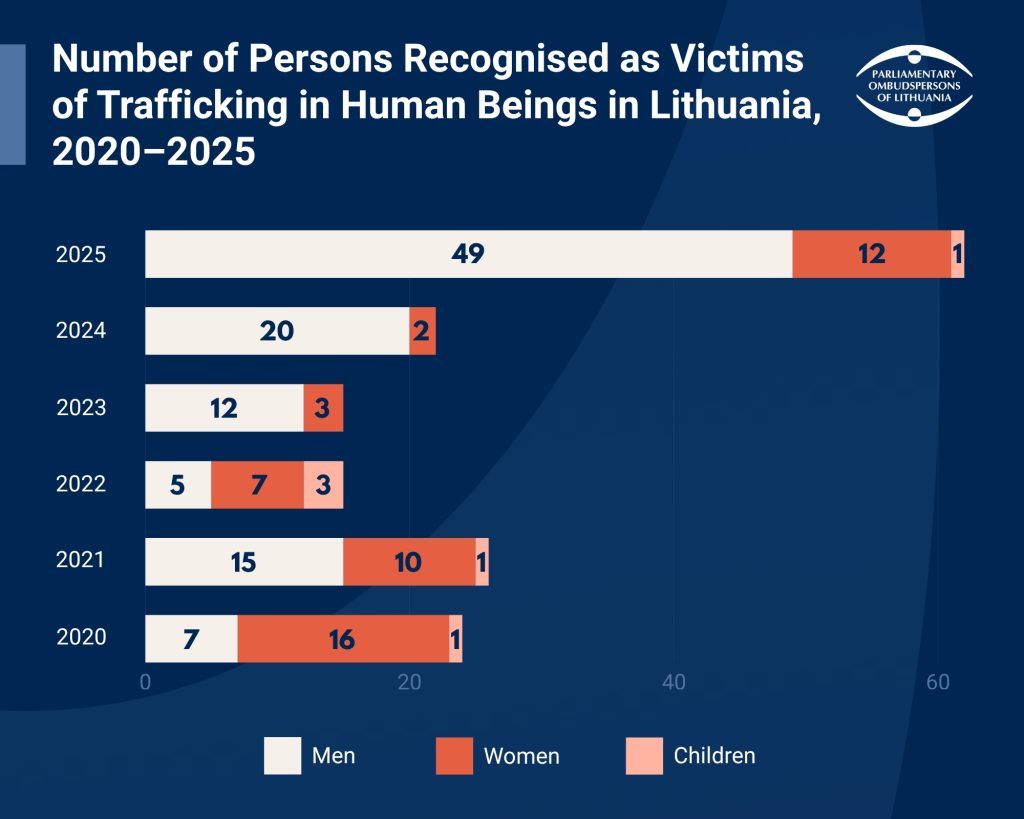
In 2025, 62 persons were recognised as victims of trafficking in human beings in the course of pre-trial investigations in Lithuania. This was the highest number recorded in six years and almost three times the number recorded in 2024, when 22 victims were identified. All 62 persons were exploited in Lithuania, while seven of them were also exploited in Poland and Hungary.
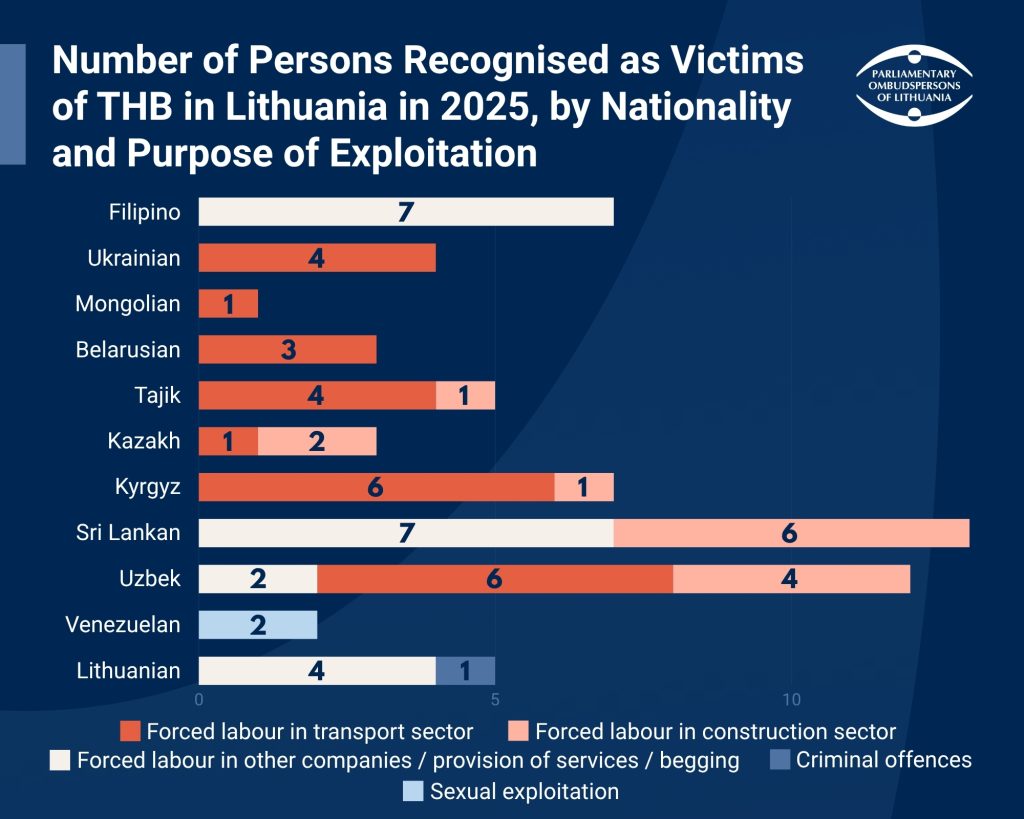
Of the 62 victims, 49 were men, 12 were women and one was a child. Most of the victims were nationals of third countries, including Sri Lanka, Uzbekistan, the Philippines and Kyrgyzstan. The majority were subjected to forced labour in the transport and construction sectors and in manufacturing companies. 2 women were subjected to sexual exploitation.
5 Lithuanian nationals were also recognised as victims: 1 was exploited for the commission of criminal offences involving the distribution of narcotic substances through parcel lockers, 1 was subjected to forced labour, and 3 were exploited for the provision of services, including begging.
13 new pre-trial investigations into trafficking in human beings were opened last year, while the total number of pre-trial investigations conducted increased from 26 in 2024 to 37 in 2025. The Review draws attention to the increasing number of pre-trial investigations concerning the exploitation of persons under the age of 29 and other vulnerable individuals for the commission of criminal offences, including theft and the distribution of narcotic and psychotropic substances in European Union Member States. One pre-trial investigation was opened to establish whether a woman had been exploited for the purpose of surrogacy.
Following the examination of cases related to trafficking in human beings and exploitation, 11 natural persons – 2 women and 9 men – and 1 legal person were convicted.
Victims were drawn into situations of exploitation in a variety of ways, most commonly through personal contacts, companies providing employment intermediation services, and social media. The most frequently used means of overcoming or controlling a person’s will were deception and the abuse of a position of vulnerability. In some cases, physical and psychological violence and threats were also used.
Although only 2 women were officially identified as victims of sexual exploitation, the Prosecutor General’s Office has observed an increase in cases involving the sexual exploitation of foreign nationals. In such cases, persons who have obtained temporary residence permits in Lithuania are subsequently exploited in prostitution in Lithuania or transported to other EU Member States for the same purpose. Given Lithuania’s economic and geopolitical situation, these trends are likely to persist in the near future.
Labour Law and Migration Mechanisms Are Being Manipulated
Data provided by various institutions indicate that the methods used by traffickers are becoming increasingly subtle. Lawful migration mechanisms, including employment agencies and subcontracting arrangements, are being used more frequently.
Foreigners are provided with misleading information about their legal status, while complex migration procedures and document forgery are used to manipulate them and keep victims in a state of legal uncertainty and dependence on their employer.
In the transport sector, which employs a large number of foreign nationals, working hours, overtime and night work are frequently not recorded. Requirements concerning working time and rest periods are not complied with, and employees are placed on unpaid leave, allegedly at their own request, thereby enabling employers to avoid paying both wages to employees and taxes to the State.
Companies operating in Lithuania recruit workers abroad who do not speak Lithuanian, lack sufficient knowledge of their rights and do not trust public authorities. These circumstances increase their vulnerability and reduce the likelihood that victims will seek assistance. According to experts, cross-border schemes involving the exploitation of workers are likely to expand in the future.
In total, 344 persons were identified in 2025 as having worked illegally or carried out undeclared self-employed activities in Lithuania. According to the State Labour Inspectorate, foreign nationals who have suffered abuse by employers in Lithuania generally do not perceive themselves as victims of exploitation or trafficking in human beings and instead regard their situation as involving violations of labour law.
Shortage of Qualified Specialists and Assistance for Victims
Parliamentary Ombudsperson Dr Erika Leonaitė emphasises that investigations into trafficking in human beings and exploitation for forced labour are particularly complex because they require proof of numerous circumstances, including the subjugation of the victim’s will, the acquisition of control over the victim, and the abuse of the victim’s position of vulnerability.
“At least a certain degree of specialisation among police investigators and judges hearing trafficking in human beings cases is essential in order to develop clear and consistent practice and to ensure that these crimes are investigated effectively. The tactics used by exploiters and the methods of recruitment are constantly changing. Difficulties therefore arise when an investigator who may be dealing with this type of crime for the first time is required to conduct a pre-trial investigation. Specialisation among officers is also essential to ensure that victims are properly informed, as practice shows that they are frequently not provided with the necessary information,” says Dr Leonaitė.
Although various training courses and other activities aimed at strengthening professional competence in the field of trafficking in human beings were organised in 2025, specialists continue to lack knowledge of the different forms of trafficking and of how victims should be identified. They are not sufficiently familiar with the latest trends, and victims are therefore often identified too late. There is also a lack of continuous professional training.
The State Labour Inspectorate, pre-trial investigation bodies and courts lack specialists, investigators, prosecutors and judges specialising specifically in cases of trafficking in human beings and exploitation for labour and services. This makes it more difficult to identify these criminal offences and distinguish them from other crimes.
As a result, persons exploited for the commission of criminal offences are sometimes themselves held criminally liable because they were not identified as victims of trafficking in human beings during the pre-trial investigation. Exploitation for forced labour also sometimes remains unidentified because the circumstances are assessed solely as violations of labour law.
The Review notes that allocating greater resources to the work of pre-trial investigation bodies on trafficking in human beings cases would make investigations more effective and enable the identification of an even greater number of victims.
A need was also identified to provide additional, targeted funding to the State Labour Inspectorate in order to ensure sufficient human and administrative resources for combating trafficking in human beings involving exploitation for labour and services. Strengthening the competence of investigators and judges in this field and introducing at least partial specialisation would also make a significant contribution to an effective response to trafficking in human beings.
Since a substantial proportion of trafficking in human beings remains undetected, the organisation of assistance to victims is also adversely affected.
According to non-governmental organisations providing assistance, law enforcement officers do not refer a sufficient number of victims to these organisations. Persons recognised as victims of trafficking in human beings are generally informed of their rights and the possibilities of obtaining assistance only through a general notice provided in Lithuanian. They are not provided with specialised information.
Furthermore, victims of trafficking in human beings are not provided, in a language they understand, with the annex to the protocol explaining victims’ rights approved by the Prosecutor General. This gives grounds to conclude that the right of all victims of trafficking in human beings to be comprehensively informed of their rights and the possibilities of obtaining specialised assistance is not currently being fully guaranteed.
Insufficient interinstitutional cooperation and inadequate coordination of actions in this field remained the principal challenges to ensuring the effective prevention of trafficking in human beings. This problem is particularly evident in the cooperation between institutions, municipalities and non-governmental organisations. In 2025, information was not shared sufficiently and actions were not properly coordinated.
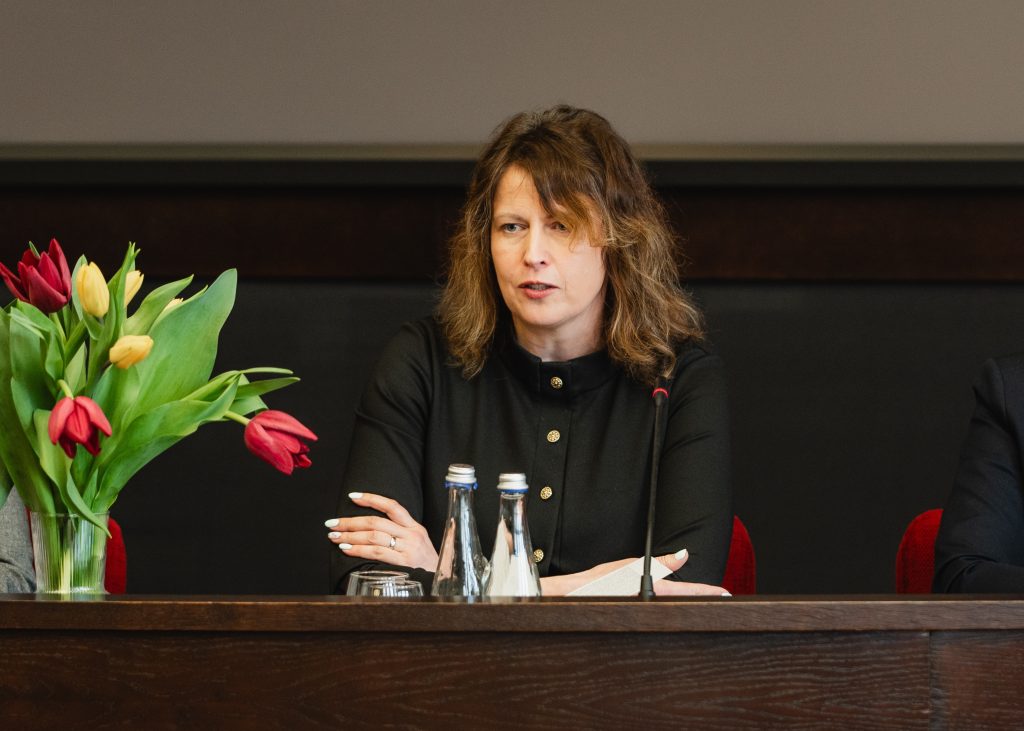
“Some municipalities still do not identify trafficking in human beings as a problem relevant to them. Consequently, they do not see a need to cooperate and do not undertake preventive measures. Nevertheless, last year non-governmental organisations provided assistance to victims of trafficking in human beings in every county of Lithuania, and these organisations see a substantial need for interinstitutional cooperation. Therefore, even where it may appear that trafficking in human beings is not taking place in a particular municipality, it remains essential to develop dialogue with pre-trial investigation bodies, non-governmental organisations and trade unions, including at county level. For victims to report the exploitation they have experienced, they must not only know where to seek assistance but must also be confident that they will receive the necessary support and protection,” says Parliamentary Ombudsperson Dr Jolita Miliuvienė.
The Parliamentary Ombudsperson notes that municipal commissions for coordinating the fight against trafficking in human beings have been established in fewer than one third of Lithuania’s municipalities, and only six of these commissions publicly provide information about their activities.
Responsible Authorities Are Recommended to Strengthen Cooperation and Professional Competence
The Parliamentary Ombudspersons submitted recommendations to the Government, ministries, the Prosecutor General’s Office, the Police Department, municipalities and other responsible bodies with a view to strengthening the fight against trafficking in human beings, developing interinstitutional cooperation, and increasing the specialisation of pre-trial investigation officers, judges and other professionals in the field of trafficking in human beings.
The recommendations place particular emphasis on the need to improve the mechanism for collecting, storing and processing data. An improved mechanism should help ensure that all institutions have access to consistent information and are able to take decisions based on accurate data.
Information for victims of trafficking in human beings: https://prekybazmonemis.lt/en/pagalba/
Other news
3 November 2025
International Conference “The Role of Independent Oversight Institutions in the Constitutional Framework”
Read more
3 November 2025
Baltic–Nordic Ombuds and Chancellor of Justice Meeting: Multiple Mandates, Prisons, and a Fight for Public Trust
Read more
8 August 2025
New report on the situation regarding countering human trafficking in Lithuania
Read more
12 December 2024
